
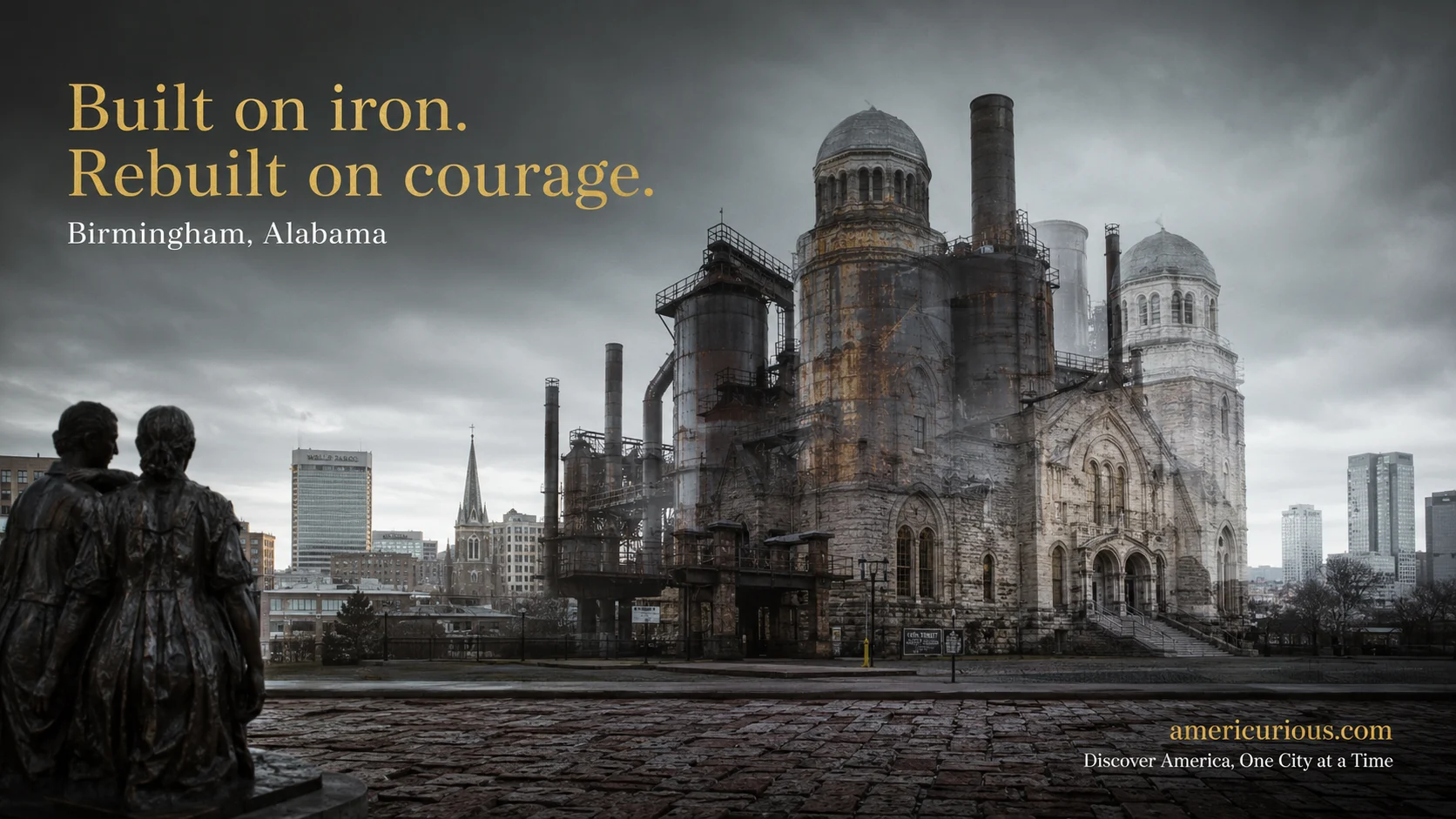
Birmingham, Alabama culture guide: explore civil rights landmarks, 8 annual festivals, free museums, and neighborhood gems. Your essential 2026 travel planner.
Birmingham, Alabama — nicknamed the Magic City — is one of the South’s most layered destinations, where iron-age industrial history collides head-on with the nation’s most consequential civil rights story. Whether you’re here to walk the Civil Rights District, eat your way through Avondale’s food scene, or catch one of the city’s surprisingly diverse cultural festivals, Birmingham rewards curious visitors who show up ready to listen.
Quick Facts at a Glance
- Population: ~198,477 (ACS 2024 data via Census Reporter)
- Founded/Incorporated: 1871 — established at the crossing of two railroad lines near rich mineral deposits (Alabama Department of Archives and History)
- Cultural Identity: The birthplace of America’s civil rights movement and the industrial heart of the Deep South, now reinventing itself through food, arts, and neighborhood revitalization
- Best Visit Months: March–May and October–November — mild temperatures, peak festival season, and lower humidity than summer
- Avg Daily Budget: $85–$160/day (budget) | $160–$280/day (mid-range) — museums are largely free, which helps
- Primary Transit: MAX Transit (BJCTA) bus system, 38 routes across Jefferson County; BX rapid transit runs the main corridor. No Sunday service — plan accordingly.
Heritage & Cultural Roots
Birmingham was born fast. Founded in 1871 at the intersection of two rail lines, the city shot up so quickly from a field of mineral-rich Alabama soil that onlookers started calling it the Magic City. The combination of iron ore, limestone, and coal in the surrounding Red Mountain practically wrote the city’s first chapter for it. By the early 1900s, Birmingham had become one of the South’s dominant industrial centers for iron and steel production — a status you can still feel walking through the hulking blast furnaces at Sloss Furnaces National Historic Landmark, where iron was smelted continuously for nearly a century.
The second chapter is harder, and more important. By the 1960s, Birmingham had become the focal point of the Civil Rights Movement. The images that emerged from this city — fire hoses turned on peaceful marchers, police dogs, and the catastrophic 1963 bombing of 16th Street Baptist Church that killed four young girls — shocked the country and helped accelerate the passage of the Civil Rights Act and Voting Rights Act. Today the Birmingham Civil Rights District, a six-block National Register Historic District anchored by Kelly Ingram Park, the 16th Street Baptist Church, and the Birmingham Civil Rights Institute, preserves that history with unflinching honesty. This isn’t sanitized heritage tourism — it’s a place that takes its responsibility seriously.
Locals also know that Birmingham’s cultural story runs through its African American community with particular depth. The Fourth Avenue Business District, for instance, was the commercial and cultural engine for Black Birmingham for decades, and the Birmingham Times has been documenting that history continuously since 1964.
Annual Events & Festival Calendar
Caption: Verified 2026 cultural events in Birmingham, AL. Dates confirmed via official sources — always check event websites before traveling, as schedules can shift.
| Event | Month | Location | Type | Official Info |
|---|---|---|---|---|
| Cherry Blossom Festival | March 21 | Birmingham Botanical Gardens | Cultural / Family | BBG Events |
| St. Elias Lebanese Food & Cultural Festival | April 17–18 | 836 8th Street South | Cultural / Food | St. Elias Parish |
| Jewish Food and Culture Fest | April 25 | Levite Jewish Community Center | Cultural / Food | Levite JCC |
| Magic City Art Connection (MCAC) | April 24–26 | Sloss Furnaces | Fine Art / Family | MCAC Official |
| 205 Day Festival | May 23 | Sloss Furnaces | Community / Music | City of Birmingham |
| J2A Cultural Arts Street Festival | July 18 | Downtown Birmingham | Arts / Culture | Festival Guide |
| Greek Food Festival | October 1 | 307 19th St S | Cultural / Food | Allevents Listing |
| St. Symeon Food and Culture Fair | October 17 | Birmingham | Cultural / Food | Festival Guide |
Most of Birmingham’s cultural festivals are free or low-cost to enter. The City of Birmingham events page posts last-minute updates, schedule changes, and new community events as they’re confirmed.
Community & Neighborhood Vibe
Here’s the thing about Birmingham that surprises most first-time visitors: it doesn’t feel like one city. It feels like five or six tight-knit communities that happen to share a skyline.
Five Points South is the social and creative hub, shaped by the presence of the University of Alabama at Birmingham and its 20,000+ students. Craft breweries, late-night restaurants, and live music venues cluster around the iconic Storyteller Fountain at Five Points Circle, and the streets stay active well past midnight on weekends.
Avondale is what happens when industrial grit meets creative energy. The brick warehouses along 41st Street have been converted into galleries, coffee shops, and the much-loved Avondale Brewing Company. Colorful murals cover half the walls. On weekend evenings, the neighborhood generates the kind of foot traffic most cities spend decades trying to manufacture.
Woodlawn is the city’s clearest example of community-driven revitalization in action — historical homes being restored, murals going up, and a commercial district that locals are deliberately rebuilding together, not handing off to outside developers.
💡 Local Insight: Birmingham’s neighborhood associations are unusually active. Many hold monthly public meetings, and the Birmingham City Council neighborhood portal lists contact info for every association in the city — a genuinely useful resource if you’re thinking about more than a weekend visit.
If you’re interested in how other cities balance fast growth with community identity, our guide to Georgetown, Texas and its rapid-growth growing pains makes for an interesting comparison. Birmingham is threading a very different needle — managing population decline in the core city while the metro ring grows steadily.
Practical Visitor Guide
Getting There & Around
Birmingham-Shuttlesworth International Airport (BHM) sits about 5 miles northeast of downtown and serves major carriers including Delta, American, and Southwest. For getting around once you’re here, MAX Transit runs 38 bus routes across Jefferson County from 4 AM to 11:30 PM on weekdays. The Birmingham Xpress (BX) rapid transit line runs a dedicated 10-mile corridor between Woodlawn and the Birmingham Crossplex — it’s the city’s most reliable transit option for visitors staying near downtown or Southside. Rideshare (Uber and Lyft) works well across most neighborhoods. Pro tip: MAX has no Sunday service, so plan for rideshare or a rental car if you’re visiting over a full weekend.
Where to Stay
Budget: Look for chain hotels near UAB / Five Points South — proximity to transit and walkable dining without the downtown price premium. The Visit Birmingham tourism site lists accommodation options with direct booking links sorted by area.
Mid-range: Downtown’s hotel cluster near the BJCC and the Civil Rights District puts you within walking distance of the Birmingham Museum of Art, major venues, and several of the city’s best restaurants. Rates typically run $130–$190/night.
Local Stay: Several boutique inns operate in the historic Avondale and Forest Park neighborhoods. These fill up fast around major festivals — if MCAC or 205 Day is on your itinerary, book at least six weeks out.
Accessibility & Inclusion
Birmingham follows ADA municipal standards. The Birmingham Museum of Art offers wheelchair lift access at its main entrance, two internal elevators, accessible parking directly off Richard Arrington Jr. Boulevard, manual wheelchairs available at both entrances, and color-blind assistance through EnChroma glasses upon request. The Birmingham Civil Rights Institute and Kelly Ingram Park are wheelchair-accessible. The NPS Birmingham Civil Rights National Monument site also maintains ADA-compliant pathways through the district.
Budget-Smart Checklist ✅
- [ ] Free general admission — every day — at the Birmingham Museum of Art (over 27,000 works, no ticket required)
- [ ] Free self-guided tour of Sloss Furnaces National Historic Landmark grounds — one of the most atmospheric industrial sites in the Southeast
- [ ] Free access to Kelly Ingram Park and the Civil Rights District walking tour
- [ ] Check the City of Birmingham events calendar for free community events — 205 Day and J2A Festival are free to attend
- [ ] MAX Transit single fare: $1.25 / day pass: $3.00 — confirm current pricing at maxtransit.org
- [ ] Visitor discounts and trip-planning tools at Visit Birmingham
Frequently Asked Questions
Q: What is Birmingham best known for culturally?
A: Birmingham is best known as the epicenter of the 1960s Civil Rights Movement, and its Birmingham Civil Rights District — including the 16th Street Baptist Church bombing site, Kelly Ingram Park, and the Birmingham Civil Rights Institute — draws visitors from around the world. The city is equally recognized for its industrial iron-and-steel heritage, visible at Sloss Furnaces and Vulcan Park.
Q: When is the ideal month to visit Birmingham?
A: March through May is the sweet spot — temperatures run 55–75°F, festival season is in full swing, and the city’s abundant greenery is at its best. October is a close second for foliage, cool evenings, and the fall festival calendar. Check the City of Birmingham events calendar for specific dates before booking.
Q: Are there free cultural events or festivals?
A: Yes — several. The 205 Day Festival at Sloss Furnaces (May 23, 2026) is free and city-sponsored, featuring live music, food trucks, and community performances. Kelly Ingram Park and the Civil Rights District are free year-round. The Birmingham Museum of Art charges no general admission, ever.
Q: How accessible is Birmingham for families and wheelchair users?
A: The Civil Rights District, Birmingham Museum of Art, and Sloss Furnaces all meet ADA accessibility standards, with wheelchair access, accessible parking, and elevator access where applicable. The BMA’s accessibility page is the most detailed publicly available guide for visitors with disabilities. Families traveling with strollers should note that Five Points South and Avondale are generally walkable, though sidewalk quality varies by block.
Q: What’s the most reliable local transit option?
A: The Birmingham Xpress (BX) rapid transit line is the most consistent option — 15-minute peak headways, dedicated lanes along its 10-mile route, and modern vehicles. For wider coverage, MAX Transit runs 38 routes citywide. Remember: no MAX service on Sundays.
Explore More
- Heading up the coast or exploring Alaska’s cultural communities? Our guide to Sitka, Alaska’s heritage and community culture offers a fascinating contrast to Birmingham’s Deep South story.
- Curious about fast-growing cities that are wrestling with identity and infrastructure? Read our deep-dive on Princeton, Texas — America’s fastest-growing city for a look at how rapid change reshapes community fabric.
Verified Sources & Transparency
All external links below are free-to-access, authoritative, and verified current for 2026.
- City of Birmingham Official Site — Municipal events, planning, neighborhood resources
- Visit Birmingham — Official tourism board; lodging, events, visitor info
- Alabama Department of Archives and History — Heritage documentation, state historical records
- Birmingham Civil Rights Institute — Civil rights history, exhibits, educational programs
- Birmingham Museum of Art — Free general admission, cultural programming
- MAX Transit (BJCTA) — Bus routes, fares, service alerts, accessibility
- NPS Birmingham Civil Rights National Monument — Federal heritage site, accessibility, visitor planning
- US Civil Rights Trail — Birmingham — Walking tour context, landmark descriptions
- Census Reporter — Birmingham, AL — ACS 2024 demographic and population data
Last Updated: May 2026 | Researched with real-time web verification. Written in human voice for utility. For planning, always confirm event dates and hours via official municipal and event websites before traveling.
Discover more from AmeriCurious
Subscribe to get the latest posts sent to your email.