EIA forecasts electric heat +4% and heating oil +21% this winter. See why bills rise when price falls and 4 DIY fixes that save 15% now.
Your electric heat bill is forecast to cost $1,196 from November to March, up 4%. Heating oil is up 21%. Here’s why the split happened and how to keep your own bill from following it.
Picture this. It’s November 12. You walk to the mailbox in socks, open the envelope, and stare. Same house. Same thermostat setting. Same family doing the same things. Last year that first heating bill was $213. This year it’s $270. You didn’t add a room. You didn’t buy a hot tub. What changed?
That exact moment is about to happen in more than 40% of American homes. And the answer isn’t that you used more — at least not in the way you think.
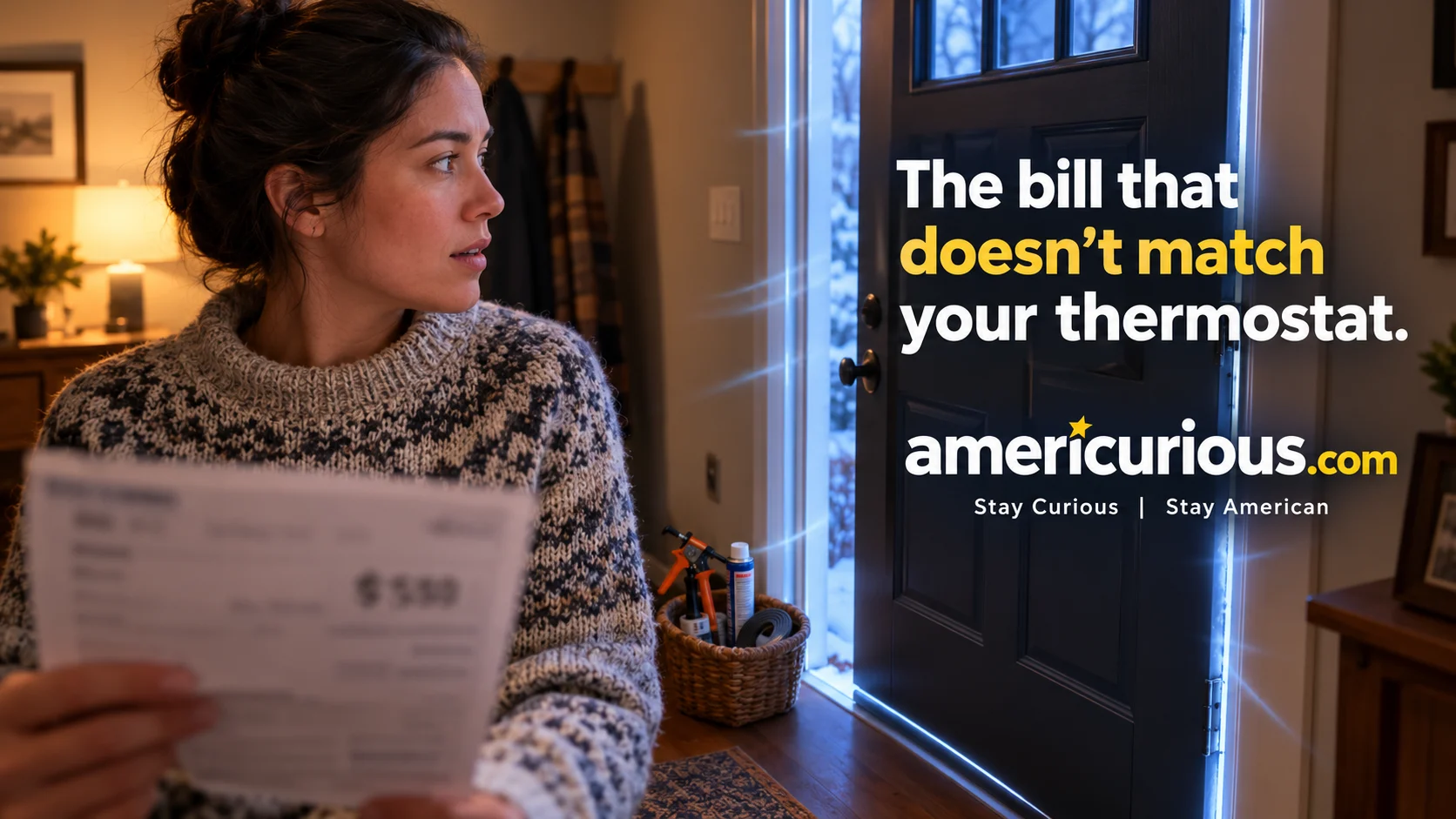
The bill that doesn’t match your thermostat
If you heat with electricity, you are not imagining this. You are living inside a national split that the federal government mapped three weeks ago.
The U.S. Energy Information Administration released its 2026-27 Winter Fuels Outlook on October 6, 2026. For the heating season from November through March, it expects:
- Natural gas homes: $640, down 9% from last winter
- Propane homes: $1,246, down 3%
- Electric-heated homes: $1,196, up 4%
- Heating oil homes: $2,115, up 21%
The agency says more than 40% of U.S. households heat mainly with electricity. In 2024, 42% reported electricity as their main space heating fuel, according to the Census Bureau’s American Community Survey. Natural gas was 47%, down from 49% in 2010.
So half the country gets a break. The other half gets a bump. Same weather forecast — national temperatures about the same as last winter — but very different prices behind the wall.
For electric-heated homes, EIA says, “we expect a 3% increase in residential electricity prices and slightly higher consumption will lead to a 4% increase in electricity bills.” The West faces the biggest jump at +9% because of a colder-than-last-year forecast. The Northeast actually sees -3% because it is expected to be warmer.
Heating oil tells an even sharper story. Prices are forecast to average $5.26 a gallon, up 34% from last winter. Even though those households are expected to use 9% less fuel due to milder Northeast weather, they still pay $367 more on average.
And right now, the price you see at delivery is higher than the forecast average. The U.S. residential heating oil price was $6.233 per gallon for the week of Oct 26, 2026, up from $3.526 a year ago. That is the number on the truck, not just the forecast.
Related Reading….
Loud Budgeting: How to Split the Bill Without Awkwardness
Why the usual advice makes it worse
When the bill jumps, most of us do three things. We turn the heat down a little, we close vents in unused rooms, and we plug in a space heater where we feel cold.
All three can cost you more.
Closing vents does not save. A 2003 Department of Energy-funded study by Lawrence Berkeley National Laboratory combined lab measurements with computer simulations. In every case, closing registers led to increased energy consumption, because savings were offset by increased duct leakage. The study also warned that closing more than 60% of registers can make a furnace operate on the high-limit switch. If your ducts run through an attic, crawl space, or garage, leave them open.
Space heaters are budget grenades. Consumer Product Safety Commission staff bought 27 portable heaters for a 2023 assessment and 22 listed a 1,500-watt maximum. At January 2026’s national average of 17.45 cents per kilowatt-hour, that one heater running 8 hours a day is a ceiling of $62.82 a month. A heated blanket at 100 watts is about $4.19 for the same 8 hours. You can heat yourself for one-fifteenth the cost.
Turning the thermostat up and down wildly can trigger the most expensive heat. Many heat pump controls are incorrectly wired to automatically turn on auxiliary strip heat if the indoor thermostat is changed by more than 3 degrees, regardless of outdoor temperature. DOE says if auxiliary heat comes on after every morning warm-up, a big overnight setback may be switching on the most expensive heat in the house.
There is a hidden layer too. Average data from EIA utility filings shows the average American home paid $132.99 for electricity in October 2025 and $175.11 in January 2026. Over those months the average price per kilowatt-hour fell from 17.97 cents to 17.45 cents. Usage jumped from 740 kWh to 1,003 kWh. The winter spike comes from usage, not price. Shorter days mean more lighting, plus fans, plus water heating when incoming water is colder.
You feel it, but you cannot see it. That is why the bill feels unfair.
“Relatively high natural gas inventories entering the winter season provide a cushion for heating demand, while households that rely on heating oil face higher prices because distillate markets remain tight.” — EIA Administrator Tristan Abbey, EIA Press Release, October 6, 2026
That tightness is measurable. East Coast distillate inventories were 32% below their five-year seasonal average in September and are forecast to remain 20% to 30% below average through winter. Wholesale electricity prices are forecast to average $52 per megawatt-hour in 2026, up 11% from 2025. The market pressure is not in your thermostat. It is in the supply yard.
So here is the pivot that changes everything: you cannot control the wholesale price, but you can control how fast your house loses the heat you already paid for.
The fix that works now that the tax credit is gone
This is the first winter without the federal insulation tax credit. The Energy Efficient Home Improvement Credit under Section 25C covered insulation and air-sealing materials at 30% of cost up to $1,200 per year. According to IRS FAQs, it was terminated effective December 31, 2025, after Public Law 119-21 signed July 4, 2025 moved the end date forward from 2032. Installation labor never qualified — only materials.
Kraken Bond’s press release on October 6, 2026 put it plainly, directing homeowners to its 22-piece Complete Insulation DIY Kit as the first winter without the credit begins. With no federal offset, labor now plays a larger role, and many households are weighing whether to handle smaller weatherization tasks themselves.
That shift actually reveals the elegant fix. The Department of Energy and ENERGY STAR agree on one number that survives every incentive change:
Air sealing and adding insulation saves an average of 15% on heating and cooling costs, or about 11% on your total energy bill. Some leaky older homes save 20% or more.
It is not glamorous. It is caulk, foam, and weatherstripping in the places you never look.
Here is a weekend method that matches what energy auditors check first. Budget 3 to 6 hours and $30 to $400 depending on how far you go. This is general information, not professional advice — if you have knob-and-tube wiring, vermiculite, or moisture issues, get an audit first.
Step 1: Find the leaks in 20 minutes. Turn off the dryer, bathroom fans, and kitchen hood. Hold a lit incense stick near common leak points on a windy day: attic hatch, top plates, recessed lights, outlet boxes on exterior walls, where plumbing comes through the floor, rim joists in the basement, and the gap under your exterior doors. If the smoke wobbles, air is moving.
Step 2: Seal the low, then the high. Start in the basement or crawl space. Foam gaskets behind outlet and switch plates on exterior walls cost about $5 for a dozen. Caulk window frames inside. In the attic, seal penetrations for wires and pipes with fire-rated caulk or foam. Don’t cover soffit vents. Wear protection, ventilate, and follow product label temperature ranges.
Step 3: Add insulation where it counts most. DOE estimates about 30% of a home’s heating energy is lost through windows. Tightly installed cellular shades can reduce heat loss through windows by 40% or more, which equals about 10% heating energy savings. Most conventional draperies can reduce heat loss up to 10% when drawn in cold weather. If you can access the attic floor, adding insulation to the recommended level for your climate zone has the highest return.
Step 4: Set the thermostat so it actually saves. DOE says you can save as much as 10% a year on heating and cooling by turning your thermostat back 7 to 10 degrees for 8 hours a day from its normal setting. The principle is simple: as soon as your home drops below its normal temperature, it loses heat more slowly. The longer it stays at the lower temperature, the more you save.
For gas, propane, or oil forced-air: 8 to 10 degrees for at least 8 hours — overnight and while everyone is at work or school. Don’t drop below 60 degrees during cold snaps to avoid pipe freeze risk.
For heat pumps: use a smart thermostat designed for heat pumps. Keep setbacks modest, 3 to 5 degrees, so auxiliary electric resistance heat does not erase the savings.
Step 5: Let a smart thermostat do the boring part. ENERGY STAR certified smart thermostats save an average of 8% of heating and cooling bills or $50 per year, verified by independent certification. The average home spends nearly $1,000 a year on heating and cooling — almost half the bill. If your current thermostat holds one temperature 24/7, the 8% is more like a floor. If you already program setbacks perfectly, it saves nearly nothing. The value is consistency.
A real household makes this concrete. Take the average U.S. home from EIA’s 861M data: 740 kWh in October 2025, 1,003 kWh in January 2026, bill up $42.12 in three months even though price per kWh fell. That extra 263 kWh is the drafty attic hatch, the furnace fan running, the lights on longer. Sealing those paths does not change the wholesale market, but it cuts the hours your system runs.
Old way vs smarter way this winter
| Old way | Smarter way | Why it works |
|---|---|---|
| Close vents in unused rooms | Leave vents open, seal duct leaks | Closed vents increase duct leakage and energy use per LBNL |
| Blast a 1,500W space heater on high | Heat yourself with 100W blanket + lower thermostat 7-10F for 8 hrs | Blanket costs ~$4/month vs ~$63 for heater at Jan 2026 avg rate; setback saves as much as 10% |
| Ignore the attic and outlets | $10 foam gaskets + caulk + cellular shades | DOE: 30% heating energy lost through windows; shades cut loss 40%+ |
| Wait for federal credit to return | Do $100-$400 DIY air sealing now | Section 25C expired Dec 31 2025; air sealing + insulation saves avg 15% heating/cooling |
The table is the philosophy contrast. The old way tries to add more heat. The smarter way stops losing the heat you already bought.
The part worth screenshotting: 3 numbers that make you the smartest person in the group chat
If you only remember three numbers from EIA’s outlook, remember these. They are what your neighbors will be arguing about at the mailbox.
1. $640 vs $2,115. That is the average November to March spend for natural gas vs heating oil this winter per EIA. Same country, same season, more than 3 times the difference. It is not about who kept their house warmer. It is about fuel markets.
2. 42% electric. That is the share of U.S. households reporting electricity as their main space heating fuel in 2024, per Census Bureau’s American Community Survey, an all-time high. If you heat with electricity, you are not an edge case. You are the trend.
3. 15% and 10%. Air sealing plus insulation saves an average of 15% on heating and cooling, and a proper thermostat setback saves as much as 10% a year. After the 30% federal credit ended, those two percentages are the only rebates that still show up every month.
One quotable line to carry: The winter bill spike comes from usage, not price — price fell while usage rose 36%. Stop the leak before you blame the rate.
FAQ
Why is my electric bill so high in winter when I have gas heat?
Gas heats the air, but electricity moves it. DOE noted a standard furnace fan for a 70,000 BTU furnace uses about 1,000 kilowatt-hours per year, about $175 at January 2026 average rates. Add space heaters, electric water heating when incoming water is colder, and longer lighting hours. EIA’s winter forecast covers homes whose main heat is electric, but it also forecasts residential electricity prices up 3% on average for everyone.
Will my heating bill be higher this winter?
It depends on your main fuel. EIA’s Winter Fuels Outlook published October 6, 2026 says natural gas $640 down 9% and propane $1,246 down 3% for November through March, while electricity $1,196 up 4% and heating oil $2,115 up 21% to $5.26 per gallon up 34%. The West is forecast +9% for electric heat due to colder weather; the Northeast -3% due to warmer weather. Weather can swing those numbers 10% colder or warmer.
How much can a smart thermostat really save?
ENERGY STAR says an average certified smart thermostat saves about 8% of heating and cooling bills, or $50 per year, verified by independent testing. DOE says the underlying behavior — turning back 7 to 10 degrees for 8 hours a day — can save as much as 10% a year. Savings are higher if your current thermostat holds one temperature all day and lower if you already program setbacks perfectly.
Your winter bill doesn’t have to be a surprise
Remember that mailbox moment from the start? $213 last November, $270 this January. Here is how that story ends when you run the smarter play.
You don’t call the utility to argue the rate. You spend Saturday morning with a $12 can of foam, a $8 roll of weatherstripping, and a borrowed thermal camera from the library. You seal the rim joists, the attic hatch, and the outlet gaskets. You set a schedule: 68 when you are home, 60 overnight, 62 when you are out, with a heat-pump-aware setting if you have one. Your January usage drops from 1,003 kWh back toward 860. At 18.23 cents per kWh forecast, that 140 kWh difference is about $25 that month alone — more than the materials.
- Check your fuel: If you heat with electricity or oil, expect higher bills than last winter per EIA — budget for $1,196 over five months for electric, $2,115 for oil.
- Seal first: Air sealing and insulation saves an average 15% on heating and cooling, about 11% on total energy bills, per ENERGY STAR and DOE.
- Automate the setback: 7 to 10 degrees for 8 hours saves as much as 10% a year; an ENERGY STAR smart thermostat automates it for about 8% or $50 per year on average.
Send this to the friend who texts you a photo of their thermostat every time the bill arrives — especially if they just moved to a house that heats with electricity.
Sources
- U.S. Energy Information Administration, Press Release: EIA expects a mixed picture for winter fuel costs this year, 2026, https://www.eia.gov/pressroom/releases/press593.php
- U.S. Energy Information Administration, Winter Fuels Outlook 2026-27, 2026, https://www.eia.gov/outlooks/steo/report/perspectives/2026/10-winterfuels/article.php
- U.S. Energy Information Administration, Today in Energy: Mixed outlook for energy expenditures this winter, 2026, https://www.eia.gov/todayinenergy/detail.php?id=68264
- Morningstar, EIA Sees Mixed 2026-27 Winter Heating Costs for U.S. Households, 2026, https://www.morningstar.[STRIPPED 94 bytes] Energy News Beat, EIA Expects a Mixed Picture for Winter Fuel Costs This Year, 2026, https://energynewsbeat.com/crude-oil/eia-expects-a-mixed-picture-for-winter-fuel-costs-this-year/
- Trendy Tech Tribe, Why Is My Electric Bill So High in Winter? Causes and Fixes, 2026, https://trendytechtribe.com/money-and-power/electric-bill-high-winter — citing EIA Form EIA-861M data downloaded September 25, 2026, and DOE heat pump and furnace fan data
- U.S. Energy Information Administration, Electricity use is becoming more common for residential heating, 2026, https://www.eia.gov/todayinenergy/detail.php?id=68264 citing U.S. Census Bureau American Community Survey 2024 — 42% electricity main heating fuel
- A.J. LeBlanc Heating / U.S. Department of Energy, Thermostat Setbacks: How Much You Save & How to Set Them, 2026, https://leblanchvac.com/blog/air-quality/thermostat-setbacks — DOE save as much as 10% a year by setback 7-10F for 8 hours
- ENERGY STAR, ENERGY EFFICIENCY PROGRAM SPONSOR FAQs About ENERGY STAR Smart Thermostats, 2026, https://www.energystar.gov/products/smart_thermostats/faq — average 8% or $50 per year
- LegalClarity / Internal Revenue Service, Is Home Insulation Tax Deductible or a Tax Credit?, 2026, https://www.legalclarity.org — Section 25C terminated Dec 31, 2025, 30% up to $1,200, Public Law 119-21 signed July 4, 2025
- Kraken Bond, Kraken Bond Highlights Insulation DIY Kit as Homeowners Face First Winter Without Federal Tax Credit, PressAdvantage via FinancialContent, 2026, https://markets.financialcontent.com/winslow/article/pressadvantage-2026-10-6-kraken-bond-highlights-insulation-diy-kit-as-homeowners-face-first-winter-without-federal-tax-credit — 22-piece kit, credit expired Dec 31 2025
- YCharts / EIA, US Residential Heating Oil Price Weekly, 2026, https://ycharts.com/indicators/us_residential_heating_oil_price — $6.233/gal week of Oct 26 2026 updated Oct 28 2026 vs $3.526 year ago
- U.S. Department of Energy via ENERGY STAR, Air Sealing and Insulation savings, cited in multiple ENERGY STAR pages — average 15% heating and cooling, 11% total bill