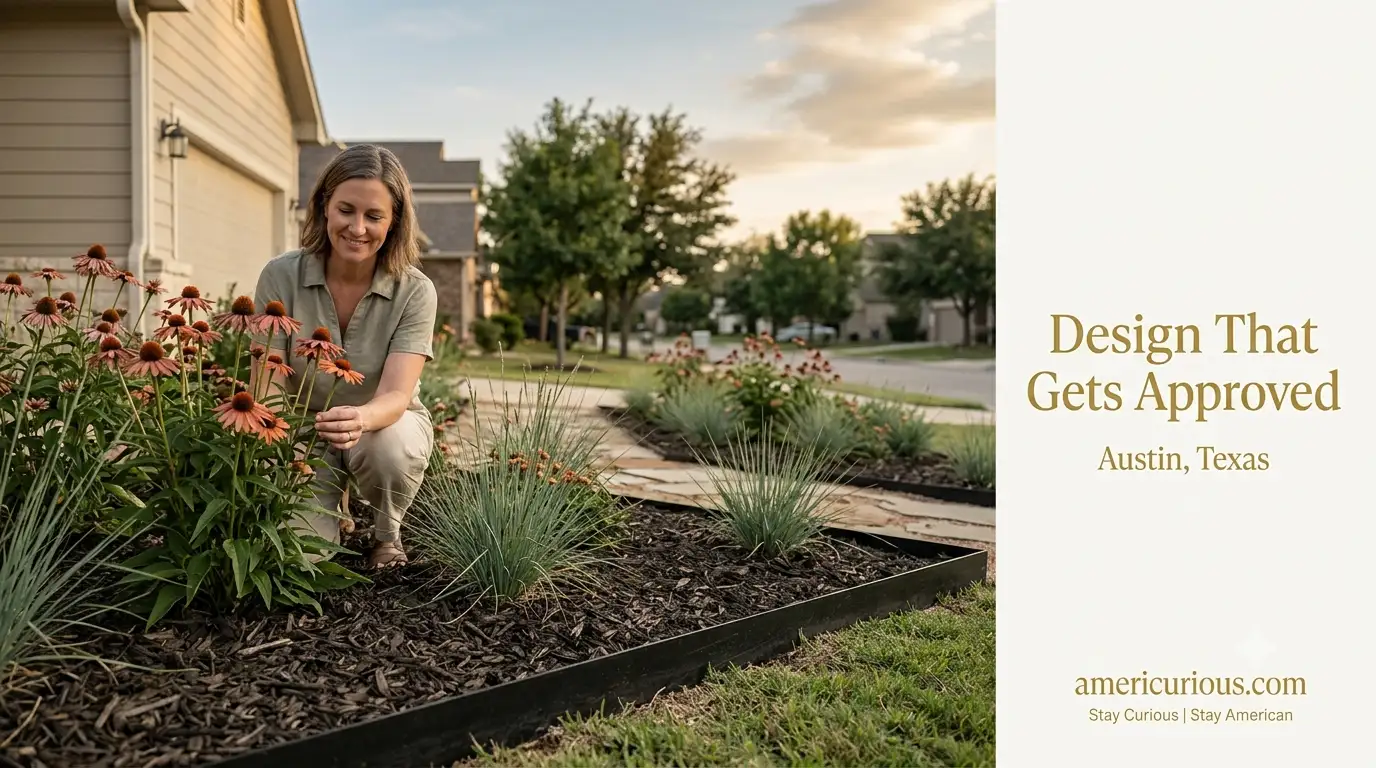
Learn how to design an HOA compliant native garden that passes review. Get our free proposal template, tidy design rules, and state law summaries today.
You want to replace your thirsty, high-maintenance turf with native plants, but the thought of an HOA violation notice stops you cold. You are not alone. Many suburban homeowners worry that a wildlife-friendly yard will be labeled “messy” or “non-compliant” by their Architectural Review Committee (ARC).
The good news is that you can build a thriving native habitat without risking fines. The secret is not fighting the HOA, but speaking its language: framing your project as “drought-tolerant, low-maintenance landscaping” with clean, intentional design.
Quick Answer & Key Takeaways Yes, you can install a native garden in an HOA, and in several states, the law protects your right to do so.
To get approved:
- Reframe the narrative: Use terms like “drought-tolerant landscaping” and “water-wise design” instead of “wild habitat” or “rewilding.”
- Design for tidiness: Incorporate defined edges, mulch beds, and structured pathways to counter the “weedy” stigma.
- Know your state laws: States like California, Florida, and Texas have passed laws preventing HOAs from banning drought-tolerant landscaping.
- Use a formal proposal: Submit a professional, detailed plan with plant names, irrigation methods, and a maintenance schedule.
What was the specific HOA rule or CC&R clause you had to navigate, and how did you address it in your initial proposal?
Read about: Texas HOA Garden Laws in 2026: What’s Actually Protected (and What Isn’t)
Can an HOA Legally Fine You for a Native Garden?
The short answer is: it depends on your state, but the legal tide is turning in favor of water-wise landscaping.
Historically, HOA Covenants, Conditions, and Restrictions (CC&Rs) mandated green, mowed turfgrass. However, as water scarcity and ecological awareness have grown, several states have enacted “Right to Garden” or drought-tolerant landscaping protections that override conflicting HOA rules.
- California: Assembly Bill 1572 (signed in 2023, effective 2024) amended Civil Code §4735. It explicitly prohibits HOAs from banning drought-tolerant landscaping, including native plants and xeriscaping, and mandates the removal of “non-functional turf” in common areas by 2027.
- Florida: The “Florida-Friendly Landscaping” law (HB 317, updated in 2023) prevents HOAs from enforcing landscaping rules that prohibit Florida-friendly practices, which include using native plants and reducing turfgrass.
- Texas: House Bill 2108 (2021) prohibits property owners’ associations from including or enforcing provisions that prohibit a property owner from implementing water-conserving landscapes or drought-resistant plants.
Disclaimer: This is general information, not legal advice. HOA laws vary significantly by municipality and state. Always review your specific CC&Rs and consult a local real estate attorney if you face pushback.
Even in states without explicit protections, HOAs generally cannot deny a request arbitrarily if the proposed design meets the community’s aesthetic standards for neatness and maintenance.
The “Tidy Native” Framework: How to Design for Approval
The most common reason HOAs reject native gardens is not the plants themselves, but the perception that they will look unkempt. To win approval, your design must visually communicate “intentional landscaping,” not “abandoned lot.”
Apply these four rules to your design:
- Define the Edges: Use crisp, physical borders. Metal edging, stone borders, or a 2-to-3 inch trench between the planting bed and the remaining lawn or sidewalk signals that the space is actively managed.
- Use Mulch Generously: A 2-to-3 inch layer of shredded hardwood or pine bark mulch suppresses weeds, retains moisture, and provides a uniform, finished look that HOA boards recognize and approve of.
- Group by Height and Color: Plant in deliberate drifts or clusters (e.g., three to five of the same species together) rather than scattering single plants. Place taller plants at the back (near the house or fence) and shorter plants at the front.
- Maintain Clear Pathways: Ensure walkways to the front door are clear of overgrowth. A defined path (using stepping stones or gravel) shows the space is designed for human use.
Which native plant surprised you by thriving in your specific yard conditions, and which one failed to meet your expectations?
Best Low-Profile Native Plants by U.S. Region
When submitting your proposal, include the botanical and common names of your plants. Choosing species known for their tidy, compact growth habits reduces the chance of an ARC member imagining an overgrown jungle.
- Northeast / Mid-Atlantic:
- Echinacea purpurea (Purple Coneflower) – Upright, long-blooming, and structurally sound.
- Asclepias tuberosa (Butterfly Weed) – Bright orange, clump-forming, and stays under 2 feet tall.
- Schizachyrium scoparium (Little Bluestem) – An ornamental grass that provides winter structure without flopping over.
- Southeast:
- Rudbeckia hirta (Black-Eyed Susan) – Reliable, bright, and well-behaved.
- Ilex vomitoria (Yaupon Holly) – A native evergreen shrub that can be pruned into neat, formal shapes.
- Liatris spicata (Dense Blazing Star) – Vertical flower spikes that add formal structure.
- Midwest:
- Monarda fistulosa (Wild Bergamot) – Attracts pollinators and maintains a tidy clump.
- Pycnanthemum tenuifolium (Narrow-Leaf Mountain Mint) – Fine-textured foliage that looks deliberate and neat.
- Amorpha canescens (Lead Plant) – Low-growing, drought-tolerant, and non-invasive.
- West / Southwest:
- Salvia spathacea (Hummingbird Sage) – Low-growing, evergreen, and highly drought-tolerant.
- Ceanothus griseus ‘Yankee Point’ (Carmel Creek Ceonothus) – A tidy, spreading evergreen shrub.
- Epilobium canum (California Fuchsia) – Provides late-season color with a compact habit.
How to Talk to Your Neighbors Before You Dig
HOA boards are often influenced by neighbor complaints. A proactive conversation can turn potential critics into allies. You do not need to ask for their permission, but framing the project as a community benefit can prevent friction.
Use this neighbor-introduction script:
“Hi [Neighbor’s Name], I’m planning a small landscaping update in my front yard this spring. I’m replacing some of the high-water turf with native, drought-tolerant plants. My goal is to cut down on watering and lawn maintenance, and I’m making sure the design has clean edges and mulch so it stays looking neat. I’ve attached a quick sketch of what it will look like. I’d love to hear your thoughts, and I’m happy to answer any questions before I submit the plan to the HOA.”
How did your neighbors actually react when you showed them your plan, and what was their biggest concern?
Your Step-by-Step HOA Approval Proposal
Do not just submit a handwritten note or a vague idea. Treat your HOA submission like a professional business proposal. This demonstrates respect for the process and makes it easy for the ARC to say “yes.”
Information-Gain Asset: The HOA Native Garden Proposal Template Copy and adapt this structure for your submission:
- Project Overview: “Installation of a drought-tolerant, water-wise landscape in the front yard, replacing approximately [X] sq. ft. of non-functional turf.”
- Design Philosophy: “The design prioritizes water conservation, reduced chemical use, and low maintenance, while adhering to community aesthetic standards through defined planting beds, mulch, and structured plant groupings.”
- Plant List (Table Format): Include columns for Botanical Name, Common Name, Mature Height, and Sun/Water Requirements. (e.g., Echinacea purpurea | Purple Coneflower | 2-3 ft | Full Sun / Low Water).
- Irrigation Plan: “A drip irrigation system with a smart controller will be installed to ensure efficient water delivery during the 6-to-8 week plant establishment period, after which supplemental watering will be minimal.”
- Maintenance Commitment: “The beds will be edged quarterly, weeded monthly, and mulched annually to maintain a tidy, intentional appearance. Deadheading will be performed to prevent excessive self-seeding.”
- Visual Aid: Attach a simple, labeled sketch or a 3D rendering (tools like iScape or even a clear hand-drawn diagram work) showing the layout, edges, and mulch areas.
- Legal Reference (If applicable): “This proposal aligns with [State Name, e.g., California Civil Code §4735 / Florida Statute 604.71], which protects the installation of drought-tolerant, water-efficient landscaping.”
How long did the HOA approval process actually take from submission to final sign-off, and did you have to make any revisions?
What to Do Next
- Read your CC&Rs: Highlight any sections mentioning “landscaping,” “turf,” “weeds,” or “architectural review.”
- Sketch your space: Measure your yard and draft a simple layout applying the “Tidy Native” framework.
- Select your plants: Use your state’s native plant society database (e.g., CNPS, FNPS, or local university extension) to finalize a list of 5–7 low-profile species.
- Talk to your neighbors: Use the provided script to gauge concerns and build support.
- Submit your proposal: Use the template above, attach your plant list and sketch, and keep a dated copy of your submission for your records.
How This Was Researched
This guide was researched in October 2026 using primary legislative sources (including California AB 1572 and Florida HB 317), guidelines from established U.S. native plant organizations, and an analysis of current HOA landscaping disputes. Cost and maintenance estimates reflect national U.S. averages for 2025–2026. Because municipal codes vary, readers should always verify local ordinances.
Frequently Asked Questions
Can my HOA require me to keep some grass?
Generally, no, if the grass is considered “non-functional turf” (decorative grass with no recreational use). State laws in places like California explicitly protect your right to replace this with drought-tolerant landscaping. However, the HOA can still require that the replacement landscape be well-maintained.
Do native gardens require a special irrigation system?
While not always legally required, proposing a drip irrigation system or smart controller significantly increases your chances of HOA approval. It proves to the board that you have a concrete plan to keep the plants alive and prevent the “dead, brown yard” aesthetic they fear.
Will a native garden increase my property value?
Yes, when designed intentionally. A well-maintained, water-wise landscape with defined edges and mature native plants is increasingly viewed as a premium, low-maintenance feature by U.S. homebuyers, especially in regions facing water restrictions.
Transparency Note: This article was last updated on October 4, 2026. State-level landscaping laws are subject to change; always verify current local regulations before beginning a project.
6. Further Reading
- California Legislative Information — AB-1572 Landscape water use: homeowners’ associations. — leginfo.legislature.ca.gov (Verified primary source for CA law)
- Florida Senate — CS/HB 317: Florida-Friendly Landscaping. — flsenate.gov (Verified primary source for FL law)
- National Wildlife Federation — Certified Wildlife Habitat Program Guidelines. — nwf.org (Authoritative guide on habitat requirements)
- California Native Plant Society (CNPS) — Gardening with Native Plants. — cnps.org (Authoritative plant selection resource)
- Bellevue Herald Leader — HOAs are often barriers to sustainable landscaping. — bellevueheraldleader.com (Aug 3, 2026 data on national HOA trends)