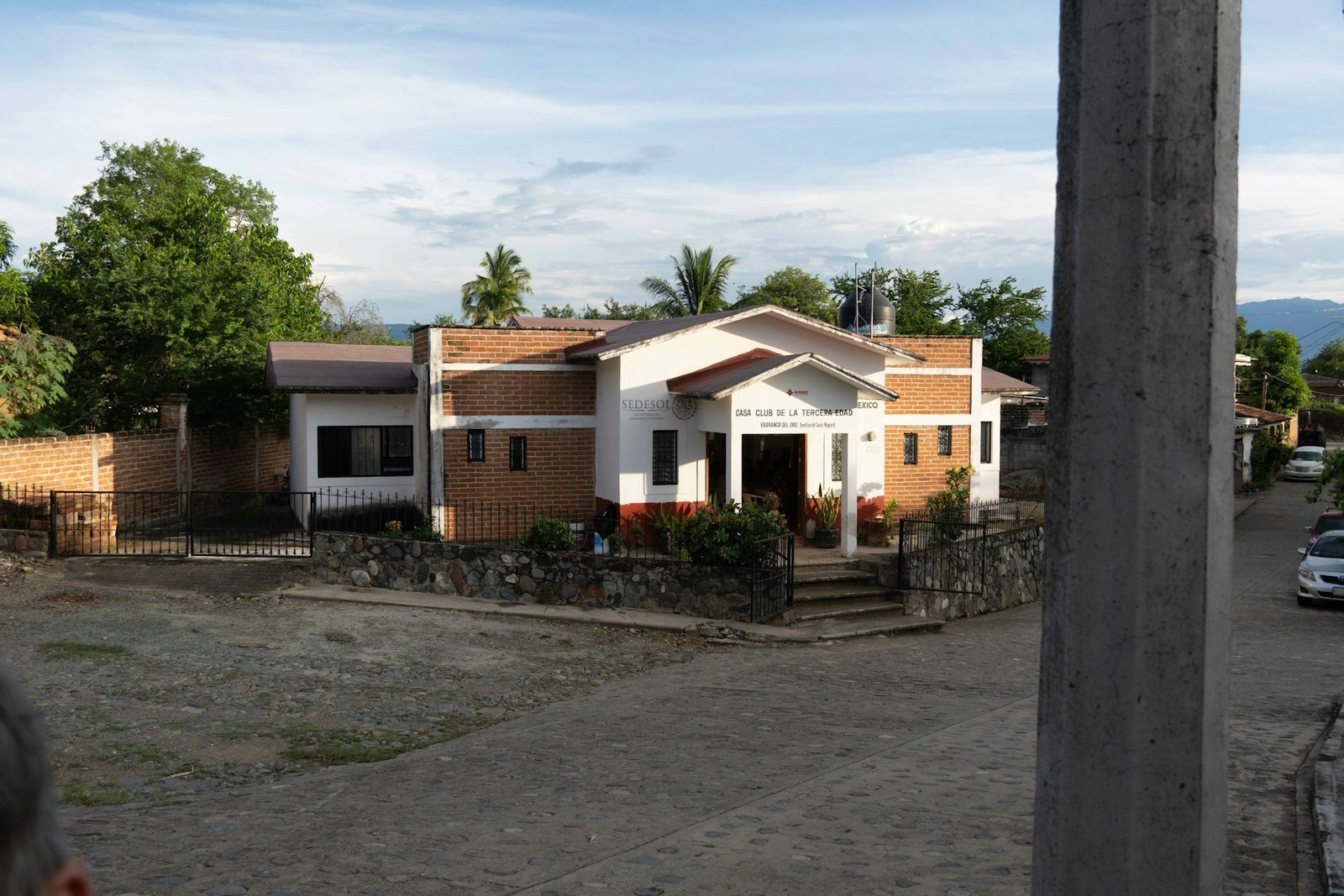
Third place loneliness in America: a 30-day Phoenix plan, with 2026 data, free places, costs and scripts to build friends.
Third place loneliness in America is well documented: the Surgeon General’s 2023 advisory reported about half of adults experience loneliness, and in-person time with friends keeps shrinking. Free third places still exist, mainly libraries, park courts and weekly markets. But friendships need roughly 50 repeated hours together, so choose one free place and return weekly for six months.
By Americurious
In this story
- What is a third place, and why does loneliness follow its loss?
- How common is third place loneliness in America in 2026?
- Why is a Phoenix-style suburb so hard to “just be” in?
- Does remote work make loneliness worse, even with a spouse at home?
- What would 30 days of hunting for a free third place look like in Phoenix?
- How long does it really take to make a friend as an adult?
- Which free third places are still alive in 2026?
- How do you find community without church or a bar?
- Why this matters to you · FAQ
Illustrative scene, built from the data below. It is 3:40 p.m. on a Tuesday in a Phoenix suburb. Your laptop closed an hour ago. You have not spoken a full sentence aloud since a 9:15 stand-up call. Your spouse is resting, and the baby is due in spring.
You search for somewhere to sit near other people. Every result wants a purchase: a latte, a day pass, a cover charge. Call it an $18 toll for existing in public (an illustrative price for a drink, a pastry and a tip).
So here is the question this story tests. Is there still a place nearby where you can stay two hours, spend nothing, and slowly become a regular?
What is a third place, and why does loneliness follow its loss?
A third place is a regular, informal gathering spot that is neither home nor work. Sociologist Ray Oldenburg named the idea in 1989 and described neutral ground where conversation is the main activity, costs stay low, and regulars set the tone. When such places thin out, strangers lose the casual contact that grows into friendship. (unesco)
Oldenburg wrote his book after moving to a suburb for a university job and noticing what was missing. His test is stricter than a Wi-Fi password. Could you walk in unplanned, stay without much spending, and find the same faces next week? (greatgoodplace)
Starbucks shows how the line has moved. In January 2025 the company began requiring a purchase to sit, use the restroom or refill water. It said the new code of conduct helps it prioritize paying customers. The earlier open-door policy dated to 2018, after two Black men were arrested in a Philadelphia store. The baristas’ union asked to bargain over how the rules are enforced.
A coffee shop can still be pleasant, but a receipt-gated room is a weaker third place.
How common is third place loneliness in America in 2026?
Common, though the number depends on the question. The 2023 Surgeon General advisory said about half of U.S. adults report loneliness. The American Psychiatric Association’s April 2026 poll found 42% lonely at least weekly, up from 33% in 2025. Gallup’s daily measure runs lower, near one in five.
At a 20-person open-play night, 42% means about eight people felt lonely this week [Analysis: assumes the poll rate applies evenly].
Time tells the same story. The advisory cited a drop in in-person time with friends from 60 minutes a day to 20 between 2003 and 2020. That is about 20 fewer hours a month. Over a year, that is 240 hours [Analysis: 20 × 12], close to five casual friendships’ worth at the research threshold covered below. (thehimalayantimesajc)
The federal time-use survey shows the slide continuing. In 2025, 30% of people socialized on an average day versus 38% in 2015, and average time fell from 41 to 35 minutes. Six minutes a day is 36.5 hours a year [Analysis: 6 × 365 ÷ 60]. Mood travels with it: Gallup’s first-quarter 2026 data found depression in 33% of adults who were lonely the day before, versus 13% of others. (blsupi)
If you feel like the only person without plans, the data says you belong to a very large club that rarely meets.
Why is a Phoenix-style suburb so hard to “just be” in?
Because third places need short, comfortable trips, and a spread-out metro in extreme heat offers neither for months. Summer 2026 tied for Phoenix’s second hottest on record, with 39 days at 110°F or higher through mid-September. Lingering outdoors is a seasonal option, not a default. (Axios)
That is about five and a half weeks [Analysis: 39 ÷ 7]. Phoenix usually dips below 100°F for good by September 29, so the practical outdoor window opens in October.
Distance matters too. KJZZ’s resident culture expert, Amanda Kehrberg, said in March 2026 that having friends in the Valley comes with a fuel bill because everything is spread out. She also called the region welcoming, since so many residents came from somewhere else. (kjzz)
Kehrberg returned to Phoenix in her late twenties and tried comedy classes, writing workshops, ballroom dance and calligraphy. Her core friend group came from a cornhole league at a local bar. KJZZ reported in 2025 that remote work is a major driver of metro Phoenix’s growth, and TikTok creator Elizabeth Pfeiffer began a video series hunting for the ideal third space, starting with the public library.
In Phoenix, plan outdoor third places for October through spring and keep one air-conditioned fallback for summer.
Check This Out: She took books, he kept tools. Gray divorce husband perspective at 66 — why loneliness beats money, 4 costs, script, and rebuild plan.
Does remote work make loneliness worse, even with a spouse at home?
On average, yes, and most sharply for people who live alone. A June 2026 study in Science found remote-capable workers spent more time alone and did not make it up with friends after work. For workers living with family, the rise in fully alone days was about one-tenth as large. (incstudyfinds)
If your day’s only conversation was a stand-up call, you already know the feeling.
The study pooled five national surveys covering 588,322 workers from 2011 to 2024, skipping 2020 and 2021, and compared jobs that can be done remotely with jobs that cannot. Authors Natalia Emanuel, Emma Harrington and Amanda Pallais reported a 58% rise in hours alone and a 72% higher likelihood of a full day with no human contact, rising to 83% for people living alone. (incinc)
Here is the twist for readers with a partner at home. One report on the paper put the rise in fully alone days at 7 percentage points for people living alone and 0.7 for those living with family. That is about two extra days a month versus one extra day every five months [Analysis: 0.07 × 30 and 0.007 × 30]. (studyfinds)
So your risk is quieter. The Survey Center on American Life found the workplace is the most common place Americans make close friends, and its 2021 poll found 12% had no close friends, up from 3% in 1990. Remote work removes that source. (americansurveycenteramericansurveycenter)
Fairness matters here. Emanuel noted that other studies find workers would give up 4% to 10% of pay to work remotely, and University of Chicago researcher Nicholas Epley suggested people may be making a poor trade for their well-being. He also said the findings do not mean every office should force people back. (NPRhoustonpublicmedia)
If you live with family, the sharpest risk, full days alone, shrinks, but the friendship gap your job used to fill stays open.
What would 30 days of hunting for a free third place look like in Phoenix?
Run four one-week trials of free places: a library branch, open-play pickleball, a Saturday farmers market, and a shared meal or volunteer shift. Score each with Oldenburg-style tests. As of October 2026, Phoenix has verified listings for the first three. This is a plan, not a diary; the author has not walked it.
If every pin on your map is a place that sells something, start with the library.
Week 1, library. Phoenix Public Library runs 16 branches, a central library and a bookmobile. It reported more than 2 million visitors in 2025, and its services are free. That is about 5,500 visits a day [Analysis: 2,000,000 ÷ 365]. One branch’s posted schedule runs to 9 p.m. early in the week, so check yours. The Surgeon General’s national strategy names libraries and parks as social infrastructure.
Week 2, open play. PHX Fray lists free social pickleball on Wednesday, October 21, 7 to 10 p.m., at Camelback High School. The city operates 187 parks. (phxfrayphoenix)
Week 3, market. The Uptown Farmers Market began its fall Saturday season October 3, 8 a.m. to 1 p.m., at 5757 N. Central Ave. The Great Good Place project cautions that visiting a market differs from dropping in at a regular haunt, so treat it as a ritual, not a hub. (northcentralnewsgreatgoodplace)
Week 4, shared meal. Ask a congregation, community center or volunteer group whether newcomers can join a meal or shift. No specific Phoenix event was verified for this week, so call first.
Score every visit (my analysis, adapted from Oldenburg’s criteria):
- Free, or under $5
- You can stay two hours
- The same faces return weekly
- Talking is welcome
- Within 15 minutes of home
Four or more checks: keep it.
Newcomers also build their own. KJZZ profiled Jalen Layfield in April 2026: he moved to Phoenix about two and a half years earlier and was running a conversation club in its fourth month.
Judge places by the tests, not the vibe, and you will know in four visits which one earns a fifth.
How long does it really take to make a friend as an adult?
About 50 hours together moves an acquaintance to casual friend, roughly 90 reaches friend status, and more than 200 builds a close friend, according to a 2018 University of Kansas study. Hours spent working together count for less. At two hours a week, the casual-friend mark takes 25 weeks, about six months [Analysis]. (kuku)
That is the turn in this story. You may have been asking where the events are, but the research points to repetition. Researcher Jeffrey Hall ran two studies, including one that followed 112 new college freshmen. You went to that one mixer, had a nice chat and never saw the person again (Illustrative). In my reading of the hours, that conversation adds two hours toward no particular friendship. (psychologytoday)
Repetition also adds up in dollars. Illustrative math [Analysis: assumes $18 per two-hour visit]: 25 paid visits is $450 for the casual-friend mark, and 100 visits is $1,800 for the close-friend mark. At three visits a week, that is about $232 a month. Ally’s June 2025 survey of young adults found an average of $250 a month on social outings. A January 2026 CFP Board survey found 67% of Americans skipped social events in the past two years mainly over cost, and 56% never said so. A library costs $0. (livenowfoxbusinesswire)
Time is the other budget. In 2025, employed adults with a child under six had 3.2 leisure hours a day, versus 4.5 for employed adults with no children under 18. That is about nine hours a week less. A two-hour weekly slot is roughly a fifth of that gap [Analysis: 1.3 × 7 = 9.1; 2 ÷ 9.1]. (bls)
What the evidence cannot tell you: Hall’s thresholds come from two small studies, one of college students. The 2025 time-use data lost about six weeks of fall interviews to the federal shutdown, and BLS says the effect cannot be quantified. The Science results are averages, not forecasts for one person, and loneliness polls use different definitions. None of this fits cleanly for people whose health or caregiving makes leaving home hard.
Repeat the same boring place, because friendship counts hours, not novelty.
Which free third places are still alive in 2026?
Five types still qualify: public library branches, park courts with open play, weekly farmers markets, recurring volunteer shifts, and a congregation’s or community center’s open meal. In Phoenix as of October 2026, the first three have verified listings. None requires a purchase to stay, though a market invites one.
If you promised yourself you would start when the heat breaks, October is that promise coming due.
- Library branch: free. Phoenix Public Library, 16 branches plus the central library.
- Park open play: listed free. PHX Fray, Wednesday, October 21, 7 to 10 p.m.
- Farmers market: free entry. Uptown, Saturdays 8 a.m. to 1 p.m.
- Volunteer shift: free. No Phoenix example verified.
- Open meal or class: usually free or donation. No Phoenix example verified.
Pay-to-stay options exist and can be good. One marketplace lists Phoenix coworking day passes from $35 to $69, with a median near $45. Weekly for 25 weeks, that is $1,125 [Analysis: $45 × 25]. It suits a focused workday and costs too much as a friendship plan. (wezoo)
Pick the free place you can reach most easily, because the best third place is the one you still visit in March.
How do you find community without church or a bar?
Choose a recurring activity where talking is built in and worship and alcohol are optional. Many Americans are outside the pews. Gallup found 31% attend weekly or nearly weekly in 2025, while PRRI’s 2025 census found 26% attend weekly. Gallup counts “nearly weekly” and PRRI does not, which explains much of the gap. (gallupprri)
Belonging is spread out. In the APA’s 2026 poll, 55% found the most belonging with family, 44% with friends and 24% with church. (psychiatry)
Neither church nor bars are the villain. Kehrberg’s closest friends came from a bar league, and a congregation can supply the same repetition for people who want it. The point is structure: the same people at the same time, with someone who expects you back. A library group or volunteer shift supplies that without a drink order or a creed.
Pick structure over venue, and you can build community anywhere that repeats.
Read More: Man-child husband leaving you drained? Why emotionally immature husbands dodge chores, what 2023 data shows, and a fair ownership fix that ends the nagging fast.
Key takeaways
- About half of U.S. adults report loneliness (Surgeon General, 2023), and 42% report it weekly in April 2026 polling. (okcfoxpsychiatry)
- On an average day in 2025, 30% of people socialized, versus 38% in 2015. (bls)
- Remote work removes the office as a friend source, and the isolation effect is largest for people living alone.
- Friendship takes roughly 50 repeated hours, about 25 weekly two-hour visits at a free place.
- Pick one free place and one weekly slot. If no one knows your name by visit 8, switch to a place with a host.
By the numbers
| Measure | Figure | As of |
|---|---|---|
| Adults experiencing loneliness | About half | Surgeon General advisory, May 2023 |
| Adults lonely at least weekly | 42% (33% in 2025) | APA poll, April 13 to 15, 2026 |
| Daily loneliness | About 1 in 5 | Gallup, 2024 |
| In-person time with friends | 60 to 20 minutes a day | 2003 to 2020 |
| Socialized on an average day | 30% (38% in 2015) | BLS, 2025 data, released June 25, 2026 |
| Remote jobs: hours alone | +58% vs non-remote jobs | Science, June 4, 2026 |
| Phoenix days at 110°F or higher | 39 | Through mid-September 2026 |
| Phoenix library visits | 2 million+ | 2025 Loneliness and isolation have reached ‘epidemic’ level, surgeon general says +7 |
Friendship math [Analysis; hours from the 2018 Kansas study; assumes two hours per visit]
| Stage | Hours | Weeks at 2 hrs/week | Paid venue at $18/visit (illustrative) | Free place |
|---|---|---|---|---|
| Casual friend | ~50 | 25 | $450 | $0 |
| Friend | ~90 | 45 | $810 | $0 |
| Close friend | 200+ | 100+ | $1,800+ | $0 |
Why this matters to you
General information, not medical or mental-health advice. If loneliness comes with hopelessness or thoughts of self-harm, call or text 988 or contact a licensed clinician.
Free, right now (2 minutes, $0). Choose one free place within 15 minutes and one weekly two-hour slot, such as Tuesdays 3 to 5 p.m. Put it in your calendar before you close this tab.
Under 10 minutes. In Phoenix, open phxfray.com/sport/open-play and register for the Wednesday, October 21 social open play. Elsewhere, search your city parks site for “open play” or “drop-in.” Official click path: go to calendar.phoenixpubliclibrary.org/hours/, open Weekly Hours, find your nearest branch and circle its latest-closing day.
Bigger commitment (25 weeks, $0). Make 25 weekly visits to the same place, from Monday, October 12, 2026 through Monday, March 29, 2027. That is about 50 hours.
Script (copy and paste). To someone you keep seeing: “I’m [name]. I’m usually here Tuesdays around 3. Want to grab the same table next week?” By text after open play: “Hey, it’s [name] from Wednesday open play. I’m going again next week and getting there at 6:45 to warm up. Want to hit a few first?”
If/then. If nobody knows your name by visit 8 (Monday, November 30, 2026, about 16 hours in), then move to a place with a host or fixed activity, such as a class or league, and restart the count. Switching costs $0 at library or park programs; check fees for leagues.
Expensive mistake. Event-hopping. Twelve different two-hour events add up to 24 hours spread across strangers, short of the 40 to 60 hours that the Kansas work links to casual friendship [Analysis]. The cost is 24 hours and 12 evenings, plus any cover charges.
One thing to cut. The plan to “start once things calm down.” Parents of children under six have about nine fewer leisure hours a week than employed adults without children. Reserve the two hours now.
If this isn’t you
- If you live alone, the Science study found isolation and distress effects roughly twice as large, so consider two fixed out-of-home slots a week. inc
- If you are retired or older, loneliness reaches every age group, and weekday library hours fit well.
- If you live outside Phoenix, swap in your county library branch and your parks department’s open-play list.
FAQ
Why do Americans have no third place in 2026?
Most still exist, but fewer are free and walkable. Starbucks began requiring purchases to sit in January 2025, spread-out suburbs add driving, and remote work removes the office as a default meeting place. Free options remain: libraries, park courts, markets and volunteer shifts. (Fortune)
Why is everyone so lonely in America?
No single cause explains it. The Surgeon General’s advisory cited less time with friends and less participation in clubs and organizations, and the 2026 Science study estimates remote work explains about a third of rising isolation and distress. Loneliness runs highest among young adults and people living alone. (ajcinc)
How can I make friends as an adult in 2026?
Return to one recurring, low-cost activity weekly. University of Kansas research links about 50 shared hours to casual friendship and 200-plus to close friendship. At two hours a week, expect about six months to casual friendship, so judge a place after eight visits, not one.
Where do Americans hang out now?
Increasingly at home. The 2025 time-use survey found 30% of people socialized on an average day, down from 38% in 2015. Young adults in Ally’s June 2025 survey most often met friends at restaurants or bars (72%) or outdoors (56%). (blslivenowfox)
How do I find community without church or a bar?
Look for structure rather than a venue: the same people, the same weekly slot and a host. Library groups, free open-play sports, volunteer shifts and classes provide it. Gallup found 57% of Americans seldom or never attend religious services in 2025, so you are far from alone.
When should loneliness make me talk to a professional?
Consider a licensed clinician if loneliness lasts weeks, brings hopelessness, or disrupts sleep, work or relationships. Gallup’s first-quarter 2026 data found depression in 33% of adults who were lonely the day before, versus 13% of others. If you have thoughts of self-harm, call or text 988 now. (upi)
Closing
Back to that Tuesday at 3:40. The answer to the opening question is yes, and it is dull: a free table, the same two hours, the same faces, 25 times. The $18 toll was never the real price. The real price was the hours spent waiting for a perfect place to appear.
This week, close the laptop, pick up your keys and drive somewhere you can stay. Then tell one person where you went.
Where’s your third place?
About this article
Researched October 5, 2026, using federal statistics, a peer-reviewed study (read through secondary reports), national polls, city and operator listings, and local public media. Editorial standards: every figure is mapped to a listed source, time-sensitive facts carry as-of dates, and the author claims no first-hand experience; the 30-day plan is untested by the author. Drafted with AI assistance, then human review and fact-checking per publisher policy.
Further Reading / Sources
Primary
- U.S. Department of Health and Human Services, Office of the Surgeon General. “Our Epidemic of Loneliness and Isolation” advisory. https://www.hhs.gov/sites/default/files/surgeon-general-social-connection-advisory.pdf (2023)
- U.S. Bureau of Labor Statistics. “American Time Use Survey, 2025 Results.” https://www.bls.gov/news.release/atus.htm (June 25, 2026)
- Science (Emanuel, Harrington, Pallais). “Home alone: Remote work, isolation, and mental health.” https://www.science.org/doi/abs/10.1126/science.aec7671 IF: 47.3 Q1 B1 (June 4, 2026; paywalled, read via secondary reports)
- American Psychiatric Association. 2026 annual mental health poll. https://www.psychiatry.org/news-room/news-releases/2026-annual-mental-health-poll (fielded April 13 to 15, 2026)
- Gallup. “Daily Loneliness Afflicts One in Five in U.S.” https://news.gallup.com/poll/651881/daily-loneliness-afflicts-one-five.aspx (2024)
- Gallup. “Americans’ Religious Engagement Holds at Lower Levels.” https://news.gallup.com/poll/702572/americans-religious-engagement-holds-lower-levels.aspx (2025 data)
- PRRI. “2025 PRRI Census of American Religion.” https://prri.org/spotlight/2025-prri-census-of-american-religion/ (2025 data)
- Survey Center on American Life (AEI). “The State of American Friendship: Change, Challenges, and Loss.” https://www.americansurveycenter.org/research/the-state-of-american-friendship-change-challenges-and-loss/ (2021)
- Survey Center on American Life. “American Men Suffer a Friendship Recession.” https://www.americansurveycenter.org/commentary/american-men-suffer-a-friendship-recession/ (2021)
- CFP Board. “Financial FOMO” survey release. https://secure.businesswire.com/news/home/20260317552834/en/Financial-FOMO-Quietly-Straining-American-Relationships-Research-Finds (March 2026)
- University of Kansas News. “How to make friends? Study reveals how many hours it takes.” https://news.ku.edu/2018/03/06/study-reveals-number-hours-it-takes-make-friend (March 6, 2018)
- UNESCO Courier. “Third places, true citizen spaces.” https://courier.unesco.org/en/articles/third-places-true-citizen-spaces (date not shown)
- City of Phoenix. “Phoenix Public Library Highlights Free Resources, Programs, and Community Support.” https://www.phoenix.gov/newsroom/public-library-news/phoenix-public-library-highlights-free-resources–programs–and-.html (January 6, 2026)
- City of Phoenix. Phoenix Public Library. https://www.phoenix.gov/library (undated)
- Phoenix Public Library. Opening Hours. https://calendar.phoenixpubliclibrary.org/hours/ (viewed October 2026)
- City of Phoenix. Parks and Recreation Department. https://www.phoenix.gov/administration/departments/parks.html (undated)
- PHX Fray. Open Play listings. https://www.phxfray.com/sport/open-play/ (viewed October 2026)
Secondary
- Associated Press via The Himalayan Times. “Loneliness poses risks as deadly as smoking: Surgeon General.” https://thehimalayantimes.com/health/loneliness-poses-risks-as-deadly-as-smoking-surgeon-general (May 2023)
- Atlanta Journal-Constitution. “Surgeon general: Loneliness is an epidemic with ‘profound’ health risks.” https://www.ajc.com/pulse/surgeon-general-loneliness-is-an-epidemic-with-profound-health-risks/XYHV5Z6SABDRFCEG4VOBAGYOMM/ (May 2023)
- WHRO / NPR. “America has a loneliness epidemic. Here are 6 steps to address it.” https://www.whro.org/national-news/2023-05-02/america-has-a-loneliness-epidemic-here-are-6-steps-to-address-it (May 2, 2023)
- Inc. “A Massive New Study of 588,000 Workers Links Working From Home to Isolation and Mental Health Problems.” https://www.inc.com/bill-murphy-jr/a-massive-new-study-of-588000-workers-links-working-from-home-to-isolation-and-mental-health-problems/91408260 (September 21, 2026)
- StudyFinds. “Has The Remote Work Boom Fueled A New Mental Health Crisis?” https://studyfinds.com/remote-work-mental-health-toll/ (June 5, 2026)
- NPR (via KVNF). “People love working from home. But does it love them back?” https://www.kvnf.org/npr-news/2026-06-08/people-love-working-from-home-but-does-it-love-them-back-a-new-study-says-no (June 8, 2026)
- UPI. “Rate of depression in United States continues at higher level.” https://www.upi.com/Top_News/US/2026/04/21/Gallup-poll-depression/8791776803313/ (April 21, 2026)
- ABC News / Good Morning America. “Starbucks reversing open-door policy to ‘prioritize’ paying customers.” https://www.goodmorningamerica.com/amp/food/story/starbucks-reversing-open-door-policy-prioritize-paying-customers-117656479 (January 2025)
- Fortune. Starbucks code of conduct. https://fortune.com/2025/01/24/starbucks-customers-paying-deescalation-training-open-door-policy-reversal (January 24, 2025)
- Axios Phoenix. “Phoenix had second-hottest summer on record in 2026.” https://www.axios.com/local/phoenix/2026/09/15/phoenix-had-second-hottest-summer-on-record-2026 (September 15, 2026)
- KJZZ. “How do you make friends in Phoenix? Some Valley residents are asking TikTok.” https://www.kjzz.org/the-show/2026-03-30/how-do-you-make-friends-in-phoenix-some-valley-residents-are-asking-tiktok (March 30, 2026)
- KJZZ. “Many remote workers feel restless at home. This TikToker is searching for the ideal ‘third space.'” https://www.kjzz.org/the-show/2025-08-05/many-remote-workers-feel-restless-at-home-this-tiktoker-is-searching-for-the-ideal-third-space (August 5, 2025)
- North Central News. “Market welcomes fall season.” https://northcentralnews.net/2026/dining/market-welcomes-fall-season/ (October 2, 2026)
- The Great Good Place project. “Third Places for the 21st Century.” https://greatgoodplace.org/table-of-contents/ (undated)
- Psychology Today. “How Do You Make or Maintain Friends?” https://www.psychologytoday.com/us/blog/brain-waves/201803/how-do-you-make-or-maintain-friends-put-in-the-time (March 2018)
- LiveNOW from FOX. Ally “Friendship Tab” survey coverage. https://www.livenowfox.com/news/young-americans-say-friendship-is-too-expensive-nearly-half-skip-events-due-costs-study (2025)
- Wezoo. “Coworking Space Phoenix: 8 Best Hotdesks for 2026.” https://wezoo.com/insights/coworking-space-phoenix (2026)