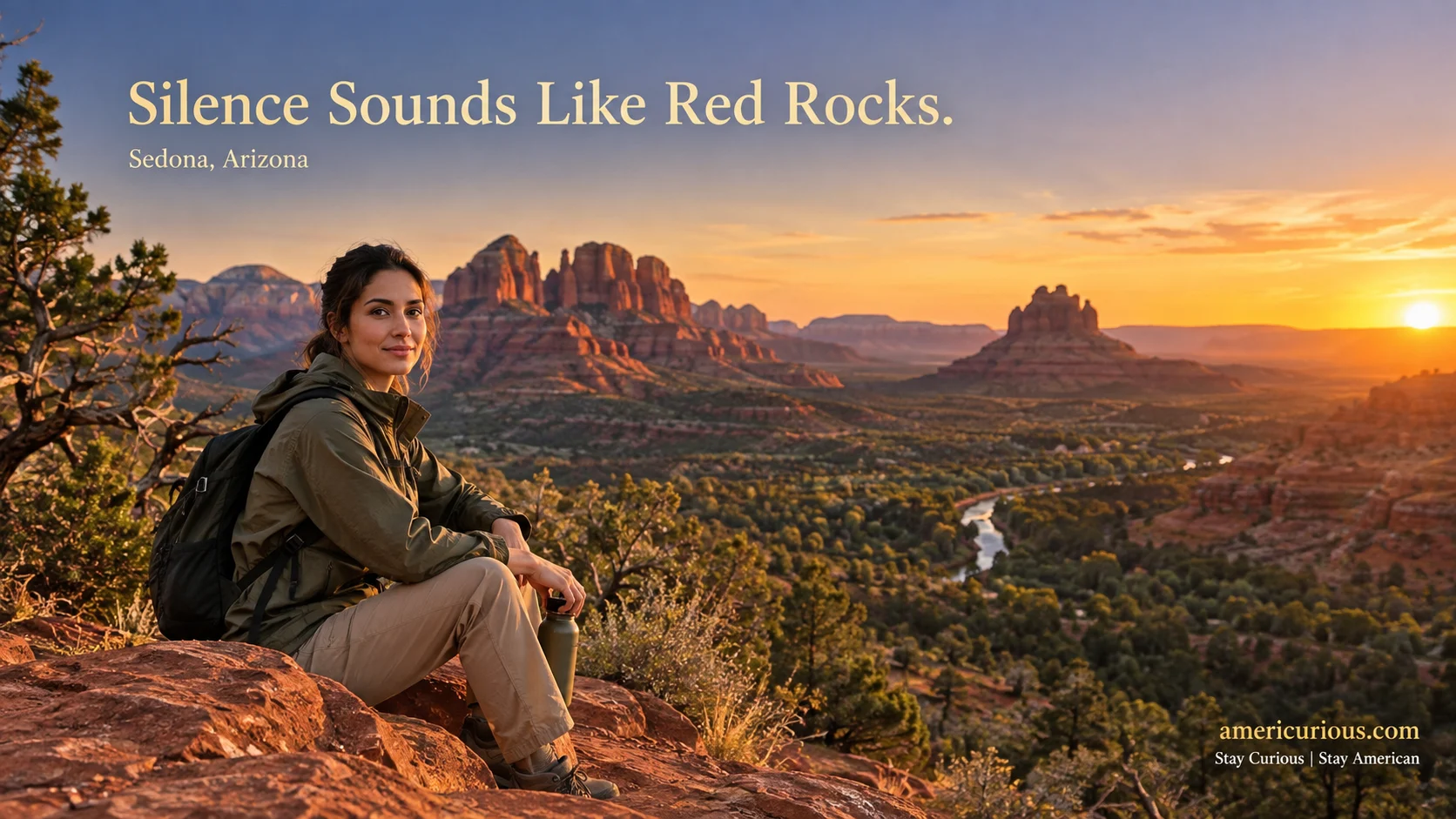
Plan the perfect Sedona trip with our 2026 guide. Discover hidden trails, local dining, and exact Red Rock Pass logistics. Avoid tourist traps today.
Sedona City Guide: The Complete Explorer’s Manual
📌 At a Glance Sedona doesn’t just ask for your attention; it demands it. Towering, rust-red sandstone buttes rise abruptly from the high desert, creating a landscape so visually arresting it borders on the surreal. This is a town of striking contrasts: world-class luxury spas sit minutes from rugged, unpolished hiking trails, and deep New Age spirituality blends seamlessly with upscale dining. It is a place to disconnect from the grid and recalibrate your senses.
🧭 The Lay of the Land (Neighborhood Guide) Sedona is a small city (population roughly 10,000) rather than a sprawling metropolis. Its “neighborhoods” function as distinct districts or valleys, each offering a completely different experience. Note that while most of Sedona lies in Coconino County, its southern reaches cross into Yavapai County.
- Uptown Sedona: The high-energy, tourist-centric spine along Highway 89A. It is lined with art galleries, boutiques, and popular restaurants. It is highly walkable but can feel crowded and traffic-heavy during peak seasons.
- Where to Stay: Best for first-timers wanting walkable convenience. Accommodations range from mid-scale boutique hotels (like the Sedona Rouge) to older, budget-friendly motels. Expect to pay a premium for the central location.
- West Sedona: The pragmatic, residential heart where locals actually live, shop, and eat. It features grocery stores, local breweries, and a more relaxed, authentic vibe.
- Where to Stay: Ideal for budget-conscious travelers and those seeking vacation rentals or chain hotels. It offers the best value and easy access to everyday amenities without the Uptown tourist markup.
- Oak Creek Canyon (Highway 89A North): A lush, scenic drive north of Uptown, characterized by towering red rocks, flowing creek waters, and dense pine forests. It feels entirely different from the arid southern parts of town.
- Where to Stay: The premier area for luxury and romance. This is home to Sedona’s high-end resorts (like Enchantment Resort) and historic creekside cabins. Prices are at the top tier, but the natural beauty is unmatched.
- Village of Oak Creek (VOC): Located about seven miles south of Uptown, the VOC is the ultimate hiking hub, flanked by Bell Rock and Courthouse Butte.
- Where to Stay: Perfect for families, active travelers, and those who want immediate trail access. Lodging consists mainly of condominiums, mid-range hotels, and resort-style complexes. It is generally quieter and more spacious than Uptown.
🏛️ Deep Roots: History & Heritage Long before it was a wellness mecca, the Sedona basin was home to the Sinagua people, who thrived here from roughly 1100 to 1400 CE, leaving behind ruins like Honanki and Palatki. Euro-American homesteaders arrived in the 1870s, establishing ranches along Oak Creek. By the 1980s, the area gained global fame as a spiritual hub following the popularization of its “energy vortexes.”
Sitka Alaska Guide: How to Plan the Ultimate Remote Island Trip
The architectural crown jewel is the Chapel of the Holy Cross. Designed by Marguerite Brunswig Staude and completed in 1956, this Roman Catholic church is built directly into the towering red rock buttes. It is a masterpiece of mid-century modern architecture blending seamlessly with nature. Visiting is free (donations accepted), and it remains an active parish. When visiting, respect the sacred nature of the space by keeping voices low and adhering to the modest dress code (shoulders and knees covered).
The area’s spiritual sites extend to the natural Vortexes (Cathedral Rock, Bell Rock, Airport Mesa, and Boynton Canyon). These sites are believed to emit earth-energy that aids in meditation. Visitors should approach these natural areas with respect: practice Leave No Trace principles, avoid playing loud music, and do not move rocks or leave physical offerings, which harms the local ecosystem.
🎨 Creative Pulse: Arts & Culture Sedona’s art scene is inextricably linked to its geology, resulting in a high concentration of fine art galleries, particularly along Highway 179 (the Red Rock Scenic Byway) and in Uptown. The Sedona Arts Center is the cornerstone of the local creative community, offering exhibitions, classes, and a fantastic gift shop featuring local artisans.
For modern attractions, the Sedona International Film Festival (held annually in February) transforms the town into a cinematic hub. For high-octane entertainment, Pink Jeep Tours offers immersive, off-road adventures in custom vehicles, providing a thrilling way to experience the rugged backcountry.
Major events draw crowds year-round. The Sedona Marathon (November) offers scenic routes through the red rocks, while various seasonal solstice and equinox gatherings celebrate the town’s musical and spiritual culture.
🍽️ The Culinary Map: Food & Nightlife Sedona’s food scene leans heavily into Southwestern and farm-to-table concepts, but it’s the specific, obsessive execution that sets it apart.
- Must-Try Local Spots: Elote Cafe is legendary for its Mexican-inspired street food; the roasted corn (elote) isn’t just a side dish here, it’s a religion (expect a wait, but it moves fast). Mariposa Latin Inspired Grill offers upscale Latin cuisine with floor-to-ceiling windows framing Cathedral Rock. For a classic local breakfast, the Coffee Pot Restaurant in Uptown is a beloved institution.
- Coffee Culture: Sedona Coffee Co. in West Sedona is a local favorite for expertly roasted beans and a relaxed, community-focused atmosphere.
- Street Food & Markets: Sedona lacks a traditional street-food cart culture. Instead, the Sedona Farmers Market (Saturday mornings, October through May, at Sedona Red Rock High School) is the premier spot for local gastro-tourism, offering fresh produce, artisanal baked goods, and local food vendors.
- Nightlife & Entertainment: Sedona is not a late-night party town; the nightlife is low-key and sophisticated. Skip the idea of a club scene; instead, grab a glass of local Syrah at the Sedona Wine & Champagne Bar in Uptown, or enjoy live acoustic music at restaurants like The Hudson. The ultimate Sedona evening activity is driving 20 minutes into the Coconino National Forest for world-class stargazing.
🌲 Into the Wild: Outdoors & Adventure
- Iconic Landmarks & Parks: Red Rock State Park is a pristine nature preserve offering guided walks and easy trails along Oak Creek. For postcard views, Airport Mesa offers a paved, easy walk to a panoramic 360-degree view of the city (go at sunset, but arrive early for parking). Cathedral Rock and Bell Rock are the most famous backdrops, though they require steep, strenuous hikes to reach the summit.
- Wildlife & Nature: Red Rock State Park and the Coconino National Forest are excellent for spotting wildlife, including red-tailed hawks, javelinas, mule deer, and occasionally bald eagles along Oak Creek.
- Adventure & Sports: Hiking is the primary draw. Devil’s Bridge is the most famous hike, featuring a massive natural sandstone arch. Go at 6:00 AM to park, or suffer the midday heat and crowds. For a less crowded, lush experience, hike the West Fork Oak Creek Trail, where you wade through the creek surrounded by towering sycamores and red cliffs. Mountain bikers flock to the Slickrock Trail for technical, red-rock riding.
- Agri-tourism: Sedona’s arid basin doesn’t support vineyards, but a 20-minute drive south to the Page Springs/Cornville area reveals a thriving wine country. Visit Alcantara Vineyards for estate-grown wines in a historic setting, or Page Springs Cellars for a relaxed, eco-friendly tasting experience.
🛍️ Markets & Mindfulness: Shopping & Wellness
- Shopping: Uptown Sedona features high-end boutiques, turquoise and silver Native American jewelry, and Southwestern home decor. For authentic, locally made crafts, visit the Sedona Arts Center gallery or the Sedona Trading Post. Always buy Native American jewelry from reputable galleries that provide certificates of authenticity to ensure you are supporting genuine indigenous artisans.
- Wellness & Spas: Sedona is a global wellness destination. Mii amo, located at the Enchantment Resort, is a world-renowned, all-inclusive destination spa. It requires a multi-night minimum, but it is the gold standard for personalized wellness. For day spa treatments, the Enchantment Resort Spa and Amandala Healing Arts offer exceptional massages, facials, and energy work. Many visitors also book private “vortex healing” sessions with local practitioners for meditation and sound bath experiences in the red rocks.
🤫 Insider Secrets: Hidden Gems & Local Vibe The general vibe of Sedona is uplifting, outdoorsy, and spiritually curious, yet it maintains an upscale, polished edge. To blend in, embrace the “outdoor chic” aesthetic—hiking boots and athleisure are perfectly acceptable in most casual dining and shopping areas.
- Hidden Gems: Skip the crowded Cathedral Rock trailhead and head to Long Valley (accessed via a dirt road off Highway 89A). It features a beautiful, secret swimming hole in Oak Creek that is far less congested (check water levels and road conditions before going). For a local hangout, bypass the Uptown tourist traps and grab a craft beer at Sedona Brewing Company in West Sedona, where locals gather in a relaxed, dog-friendly patio setting.
- Local Tip: If you want to see the red rocks without the crowds, wake up at dawn. The trails are empty, the light is incredibly soft and photogenic, and the temperatures are comfortable, even in summer.
🧳 The Logistics Blueprint (Practical Information)
- Best Time to Visit: Spring (March to May) and Fall (September to November) offer the best balance of mild weather (60s-70s°F) and vibrant scenery. Summer (June to August) brings monsoon rains, high heat (90s°F), and peak crowds. Winter (December to February) is quiet and crisp, with occasional snow dusting the red rocks, offering a magical, uncrowded experience.
- Where to Stay:
- Budget/Value ($150–$250/night): West Sedona chain hotels and vacation rentals.
- Mid-Range ($250–$450/night): Boutique hotels in Uptown (e.g., Sedona Rouge) or condos in the Village of Oak Creek.
- Luxury ($500+/night): Creekside resorts in Oak Creek Canyon (e.g., Enchantment Resort, L’Auberge de Sedona).
- Getting Around: Sedona does not have a municipal public transit bus system. The primary way to get around is by rental car, bicycle, or rideshare (Uber/Lyft). For tourists wanting a guided overview, the Sedona Trolley offers a hop-on, hop-off sightseeing route. Crucial Pass: To park at most trailheads in the surrounding Coconino National Forest (including Bell Rock, Cathedral Rock, and Devil’s Bridge), you must purchase a Red Rock Pass. As of 2024/2025, it costs $5 per day or $15 per week per vehicle. You can also use an “America the Beautiful” National Parks pass. Passes can be bought at local retail stores or via the Recreation.gov app.
- Arrival Connection: Sedona does not have a commercial airport. The closest major airport is Phoenix Sky Harbor (PHX), about a 2-hour drive south. The closest regional airport is Flagstaff Pulliam (FLG), about 45 minutes north. The most practical arrival method is to rent a car at PHX or FLG. If you prefer not to drive, the Verde Valley Shuttle provides scheduled, door-to-door service from both PHX and FLG directly to Sedona hotels.
- Local Know-How:
- Leave No Trace: This is strictly enforced and culturally expected. Stay on marked trails to protect fragile cryptobiotic soil, pack out all trash, and never stack rocks (cairns) outside of official trail markers.
- Tipping: Standard US tipping applies: 18-20% at restaurants, $2-$5 per drink at bars, and 15-20% for tour guides and spa therapists.
- Payment: Credit and debit cards are universally accepted, even for small purchases. Cash is only needed for parking meters or small tips.
- Etiquette: Sedona is a community deeply invested in conservation and spiritual respect. Keep noise levels down in natural areas, do not trespass on private property (which borders many trails), and respect the quiet, meditative atmosphere at vortex sites.
Sedona is not a place you rush; it is a place that resets you. Don’t just plan to see the red rocks—plan to let them change your perspective. Download the Recreation.gov app tonight, secure your Red Rock Pass, and set your alarm for 5:30 AM. The desert is waiting.
📚 Sources & Verification Notes
- Coconino National Forest / USDA Forest Service: Verified Red Rock Pass pricing ($5 daily, $15 weekly as of 2024/2025), trailhead requirements, and Leave No Trace regulations.
- City of Sedona Official Website: Verified local ordinances, lack of municipal public transit, and Sedona Trolley operations.
- Sedona Chamber of Commerce & Tourism Bureau: Verified festival dates (Sedona International Film Festival, Sedona Marathon) and general neighborhood characteristics.
- Red Rock State Park (Arizona State Parks): Verified park hours, wildlife viewing details, and guided walk availability.
- Recreation.gov: Verified Red Rock Pass purchasing options and America the Beautiful pass acceptance.
- Verification Note: Restaurant menus, specific tour prices (like Pink Jeep Tours), and spa treatment rates fluctuate frequently and are subject to seasonal changes. The guide provides accurate baseline expectations, but travelers should check official venue websites for exact 2025/2026 pricing and reservation requirements, especially for high-demand spots like Elote Cafe and Mii amo.